

Inquiring Minds ~ Nursery Rhymes and Fairy Tales
- Dianne Dayboll
- May 3, 2021
- 4 min read
The children began to sing Nursery Rhymes. They wanted to learn more. I told them we could learn more about them when we finished or alphabet unit. They said, "A, B, C, D, ..." as fast as they could. (It is funny how they interpret what we say.)
During this theme we focused on the children's interest as they explored, investigated, problem solved, and used team work to travel into the imaginary world of Nursery Rhymes and Fairy Tales.

The itsy bitsy spider

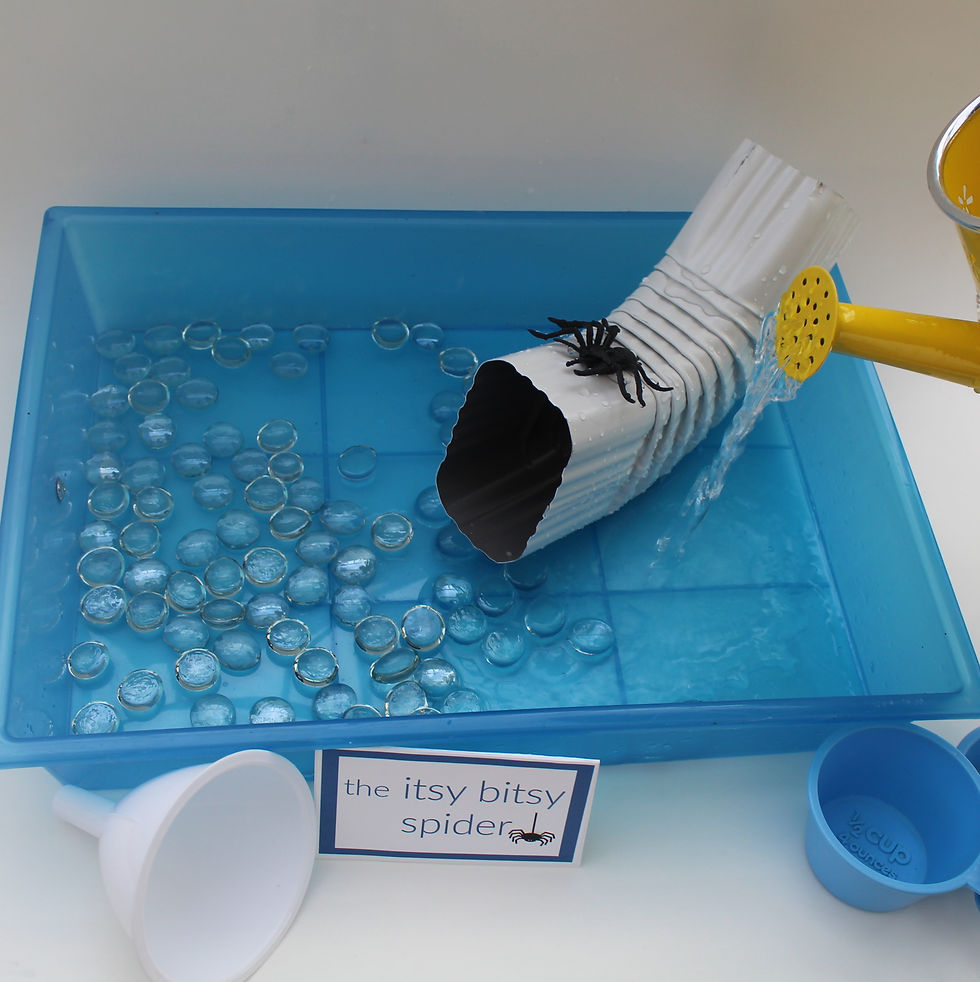
The itsy bitsy spider interactive water station: This activity gave the children, the opportunity to experiment and explore with pouring, dumping, scooping, emptying and transferring water.
The Three Billy Goats Gruff
video: The children watched a short, animated video to learn the story of the Three Billy Goats Gruff.

Small World Adventure: The children played with the Billy Goats Gruff Small World Adventure. They enjoyed acting out the story.

Billy Goats Gruff Puzzle: The children attempted to put together the puzzle.
There was an Old Woman who Lived in a Shoe
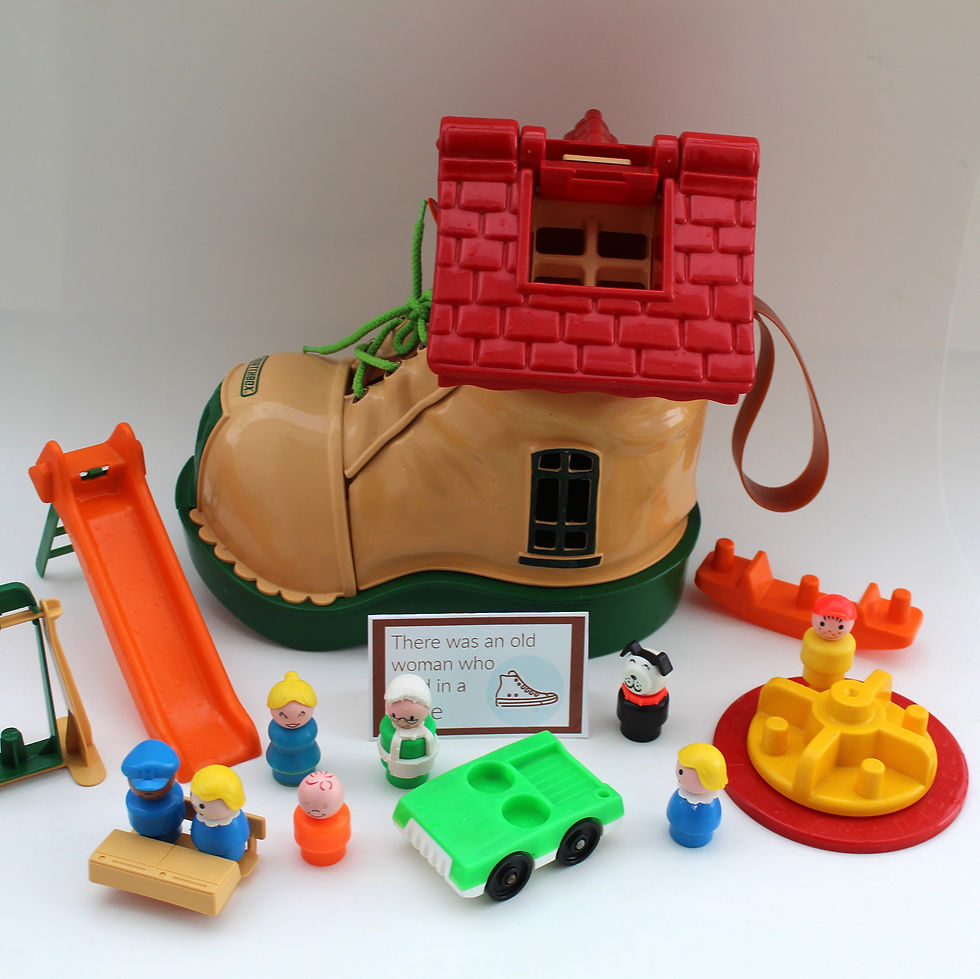
Small World Play: The children were presented with a play based learning activity for the Nursery Rhyme, "There was an Old Woman who Lived in a Shoe". This activity focused on the following skills:
fine motor
hand-eye co-ordination
role playing
literacy skills
balance
small muscle control
experimenting and exploring
Humpty Dumpty

Building Activity: I created this activity to reinforce the Nursery Rhyme, Humpty Dumpty. I was very excited to find plastic eggs that already had faces, arms and legs. The children were encouraged to construct and build walls to put Humpty Dumpty on. As they sang the Nursery Rhyme, Humpty would fall off the wall. While re-enacting the rhyme, the children used several skills including:
balance
building skills
decision making
fine motor
small muscle control
rhythm
experimenting and exploring
This activity was a big success!

Wall Game: The object of this game is to push blocks out of the wall without knocking Humpty Dumpty off the wall. The children need to concentrate, use good eye-hand co-ordination, as well as have a steady hand to keep Humpty on the wall. They did very well!

Humpty Dumpty Craft: I drew and cut out a Humpty Dumpty for each child. Each child coloured their picture. The children were given scissors and with assistance cut Humpty Dumpty into pieces. They then glued him back together like a puzzle. The children loved putting him back together with bandaids. This craft turned out so cute!
This craft encouraged the children to use the following skills:
hand-eye co-ordination
cutting/scissor skills
colouring
gluing
concentration
putting together a puzzle
strengthening their fingers
fine motor skills
etc.
The Five Little Monkeys


Popsicle Stick Monkeys: The children enthusiastically sang the rhyme and counted the monkeys. They were delighted to act out the story.
Hickory Dickory Dock


Puppet and Clock: The children were pleased to act out the rhyme using the puppet and clock.
Hey Diddle Diddle


Sensory Bin: The children independently discovered and explored the "Hey Diddle Diddle" sensory bin. They enjoyed spooning the turtle beans into the dish and having the cow jump over the moon.

The Cow Jumped Over the Moon Craft: I traced and cut out of white paper, each of the children's hands. They then coloured their hand print to look like a cow. The children stuck on star stickers. They were given a choice of what phase of moon they wanted.
Jack and the Beanstalk
Book: We read and discussed Ready to Read Jack and the Beanstalk by: Nick and Claire Page
Video: We watched a video to learn the story of Jack and the Beanstalk.
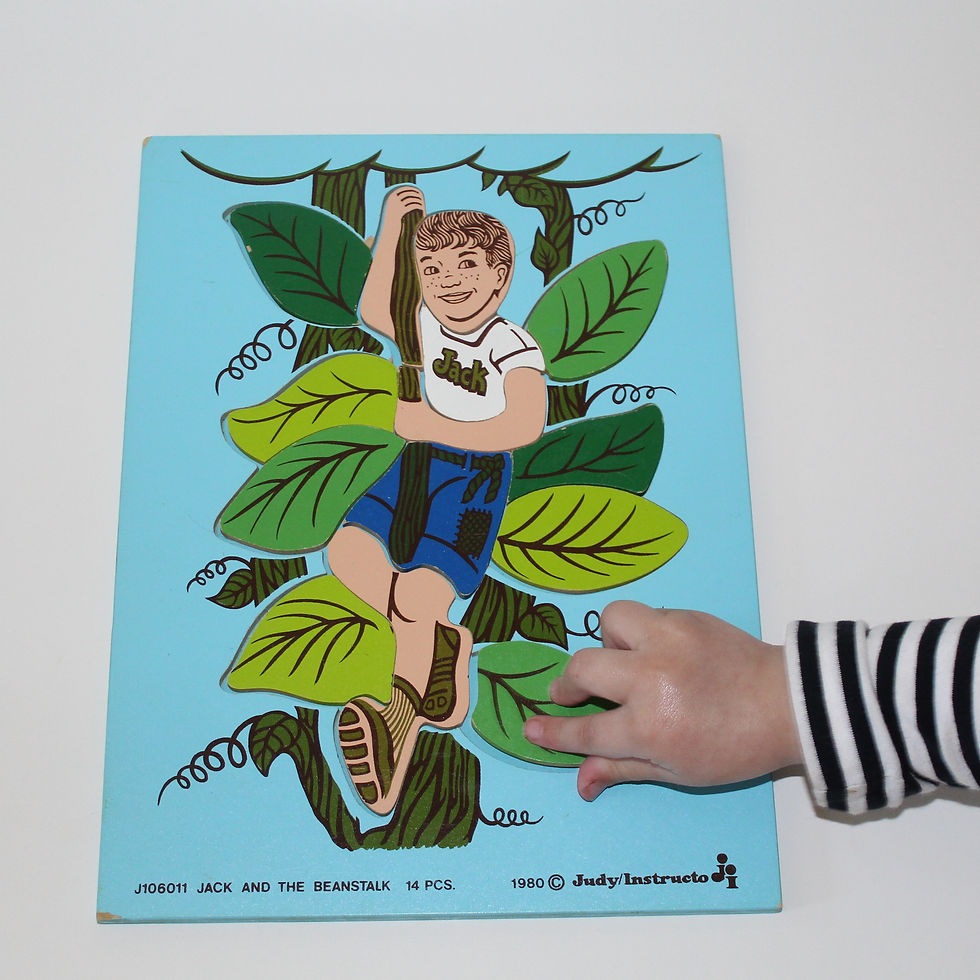
Jack and the Beanstalk Puzzle: The children put together a Jack and the Beanstalk puzzle. This puzzle is difficult and took a great deal of concentration and decision making skills.

Planting beans and Castle craft:
Planting beans helps children explore the amazing process of how plants grow from a tiny seed. The children were able to watch as the seeds began to swell, the beans grew roots and stems and leaves shot up towards the light (castle).
The children coloured castles on cardstock and attached them to a scewer stick. Each day they watched to see if their beanstalk would reach the castle.
They learned how seeds became plants, and they were able to see it happen right before their eyes! The children were amazed at the rapid transformation that took place as the seeds grew into plants.

We also planted beans in a napkin in a plastic baggie and in a paper towel in a jar, so that the children could see the roots grow. The beans planted in the dirt grew a lot faster than those planted in the baggie or jar with only wet paper towels.

Sensory Tray: This sensory tray provided different activities to help the children tell the story of Jack and the Beanstalk. They sold the cow for beans. They had Jack climb up the vine and bring down the coins and the hen. They had the hen lay golden eggs. This interactive sensory tray encouraged involvement and interaction. The children re-told the story as they acted it out.
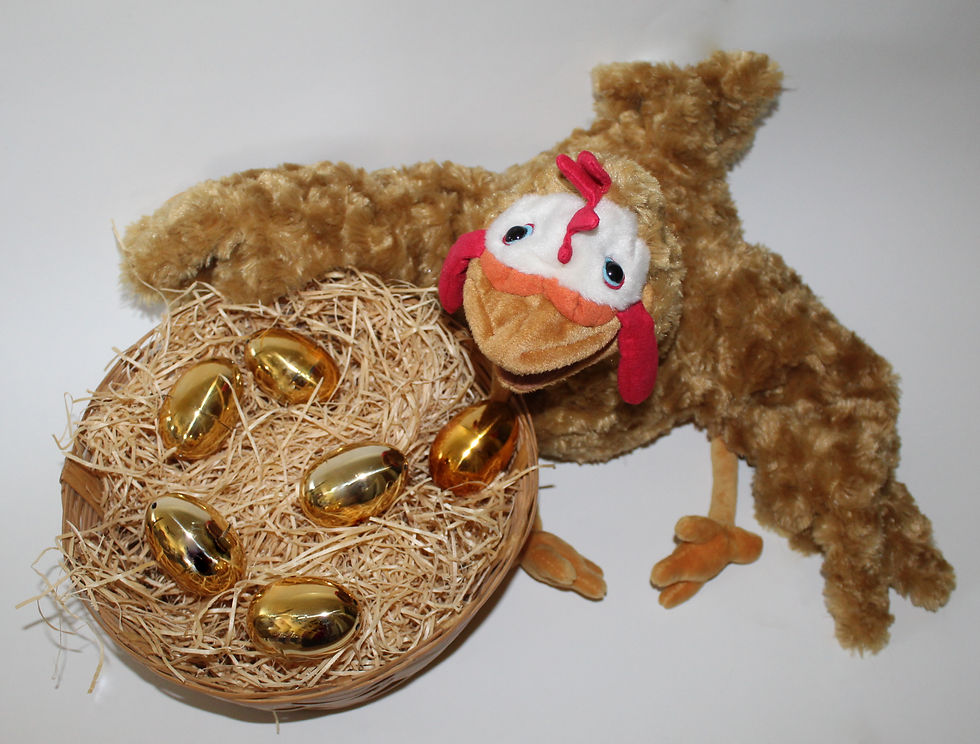
Puppet Play~ "The Hen that Laid the Golden Eggs: The children enthusiastically watched as I told the story of the hen that laid golden eggs using the puppet. They then had a turn to tell the story using the puppet and eggs as well.

Nest Cookies with Golden Eggies: The children were treated to nest cookies topped with golden Eggies as a special treat. They were delicious!
Baa Baa Black Sheep


Sensory Bin: The children filled three bags full of wool using tweezers. This activity involved: counting, hand-eye co-ordination and fine motor skills.
The Wheels on the Bus


Small World Play: The children liked playing with the bus and acting out the verses of the song.
Five Green and Speckled Frogs

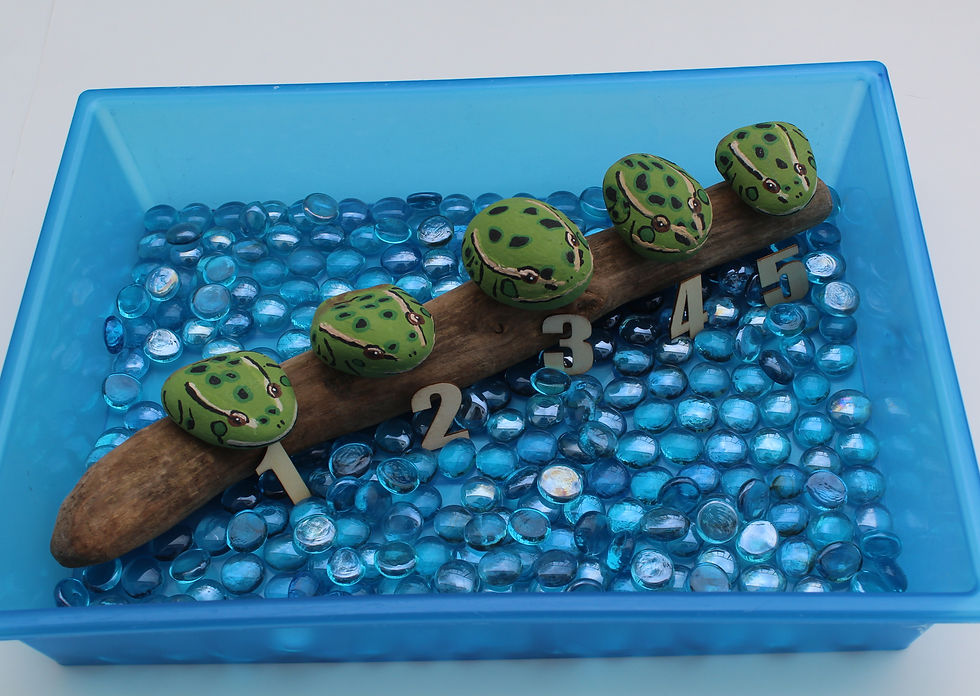
Sensory Bin: The children counted the frogs and matched them with the wooden numbers. As they sang the rhyme, the children had each frog jump into the "pond".
In conclusion: We had a great week learning more about Nursery Rhymes and Fairy Tales. The children used a lot of their developmental skills while having fun learning through play. It was a very successful week!


Comments